
Vendor onboarding automation
Designing a guided experience helped vendors complete onboarding with less operational support, fewer errors, and greater clarity throughout the process.
Designing a guided experience helped vendors complete onboarding with less operational support, fewer errors, and greater clarity throughout the process.
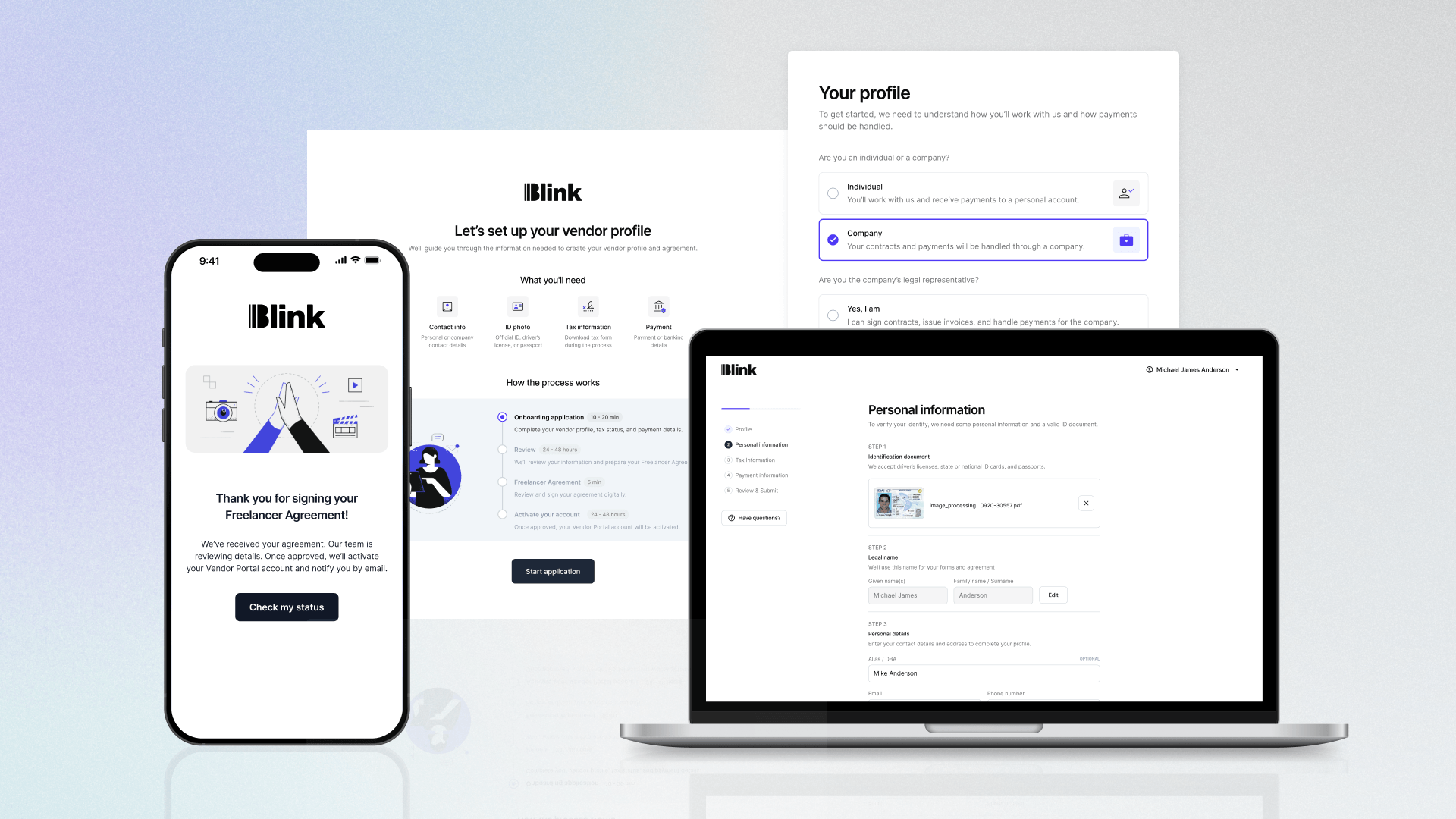
Blink is an audiovisual production company that connects talent and creative teams in different parts of the world. The company had internal platforms to manage productions, vendors, and finance, but the initial vendor onboarding still depended on a manual process handled by Operations.
Vendor onboarding was an operational bottleneck that could put the start of a production at risk.
Operations had to collect personal information, company details, tax forms, ID photos, corrections for errors, and contract signatures. All of this happened close to the start of the production, when timing was most critical.
The main problems identified were:
First, we mapped the As-Is process with the Operations team to understand how a vendor was onboarded, which steps depended on the internal team, and where the main friction points appeared.
The analysis showed that the problem was not only related to the interface: many rules, decisions, and validations lived in the team’s knowledge, but were not documented or included in the system.
Main findings
This complexity meant that onboarding could not be solved with a single linear form. It needed a flexible, guided flow with early validations.
The goal was to turn that process into a guided system capable of collecting personal, tax, and banking information, validating critical data, and preparing the required documentation for operational review and approval.
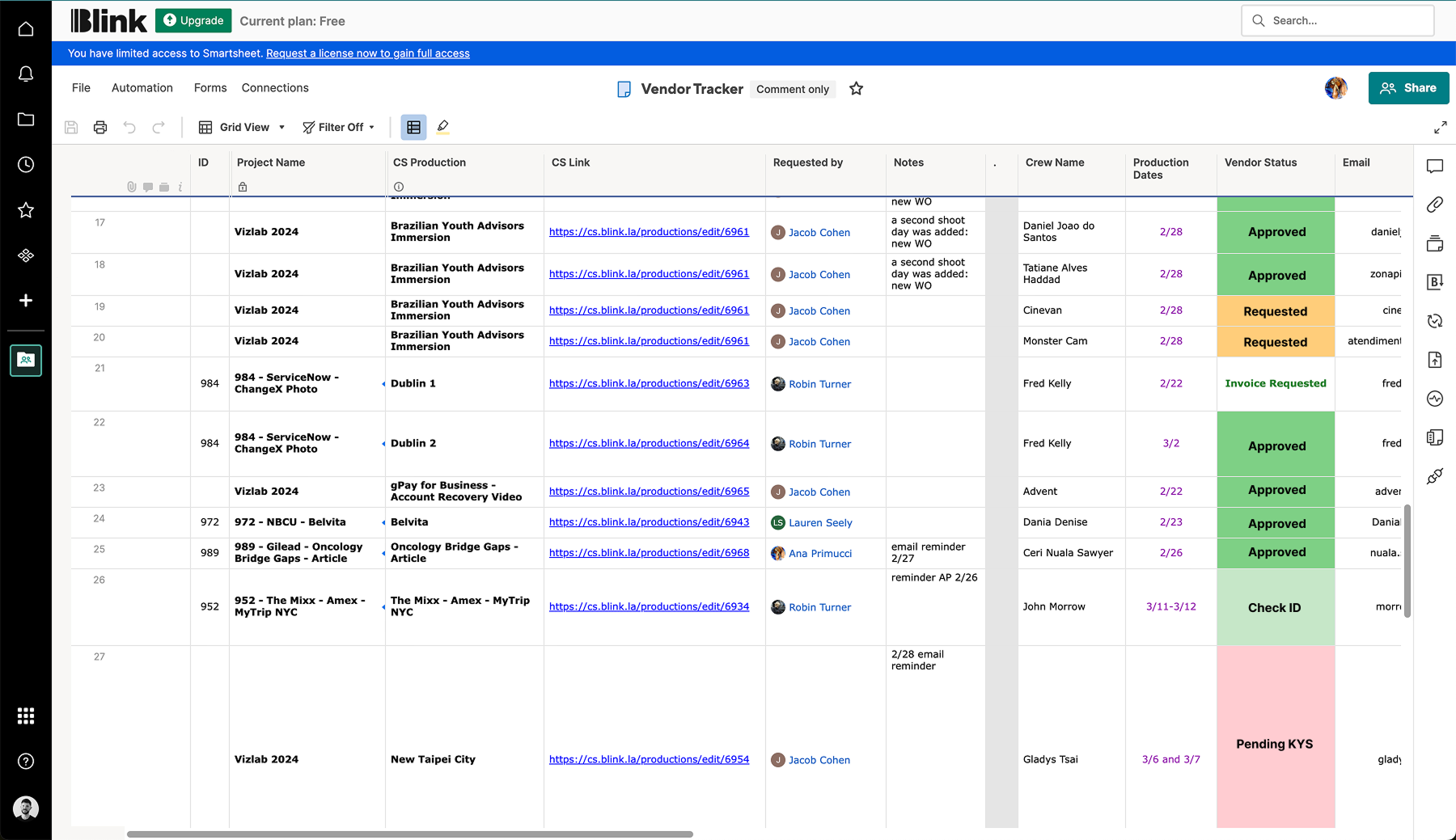
Spreadsheet used by the production team to request vendor onboarding
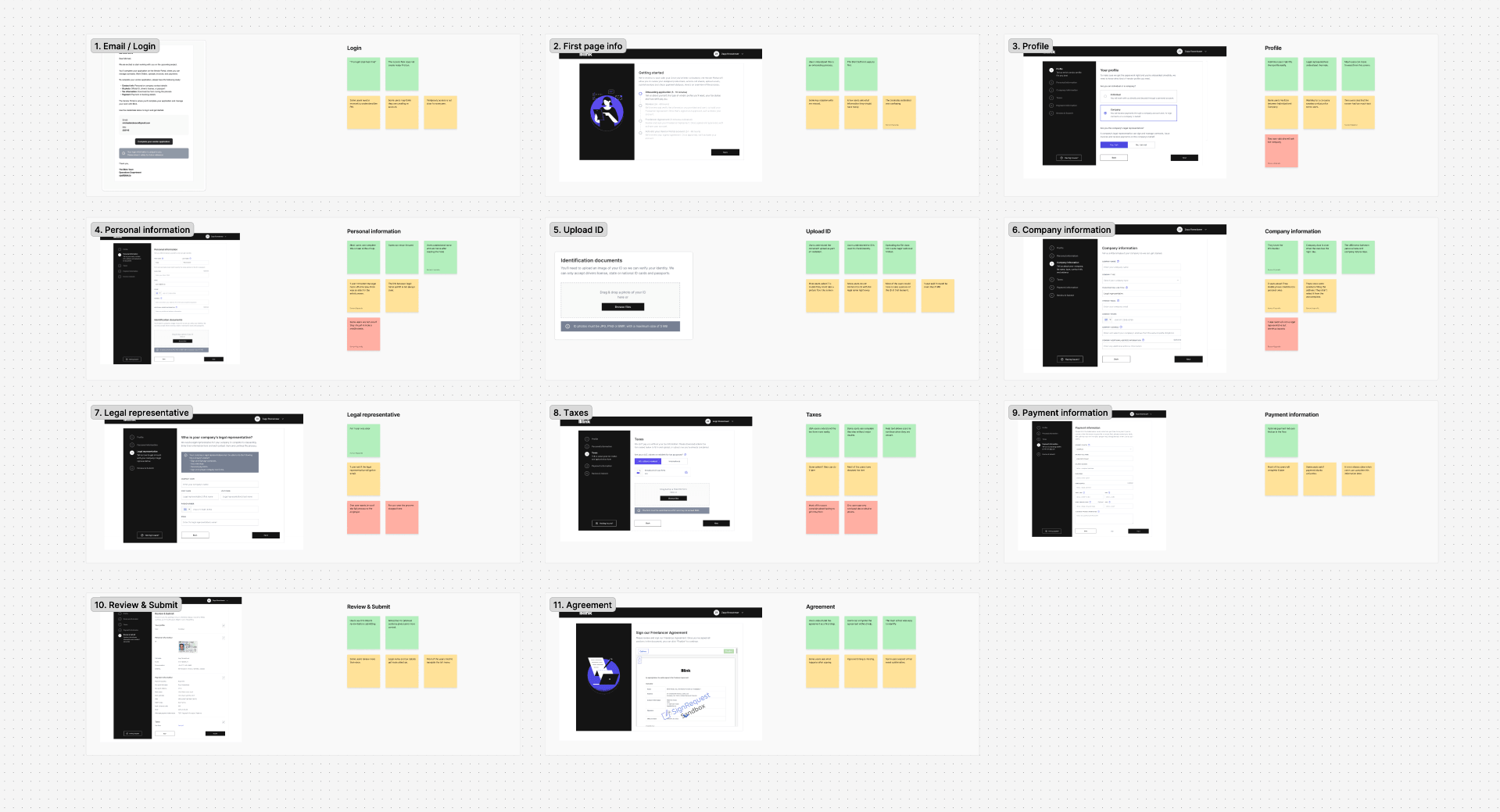
As-Is process mapping
Based on the process mapping, we defined a series of decisions to reduce complexity, anticipate errors, and decrease operational dependency.
We designed a guided onboarding flow that adapts the steps depending on the type of vendor and centralizes data entry, documentation, tax forms, review, and contract signing.
The flow was organized into stages to reduce cognitive load, show only the necessary information, and allow early validations before operational approval.
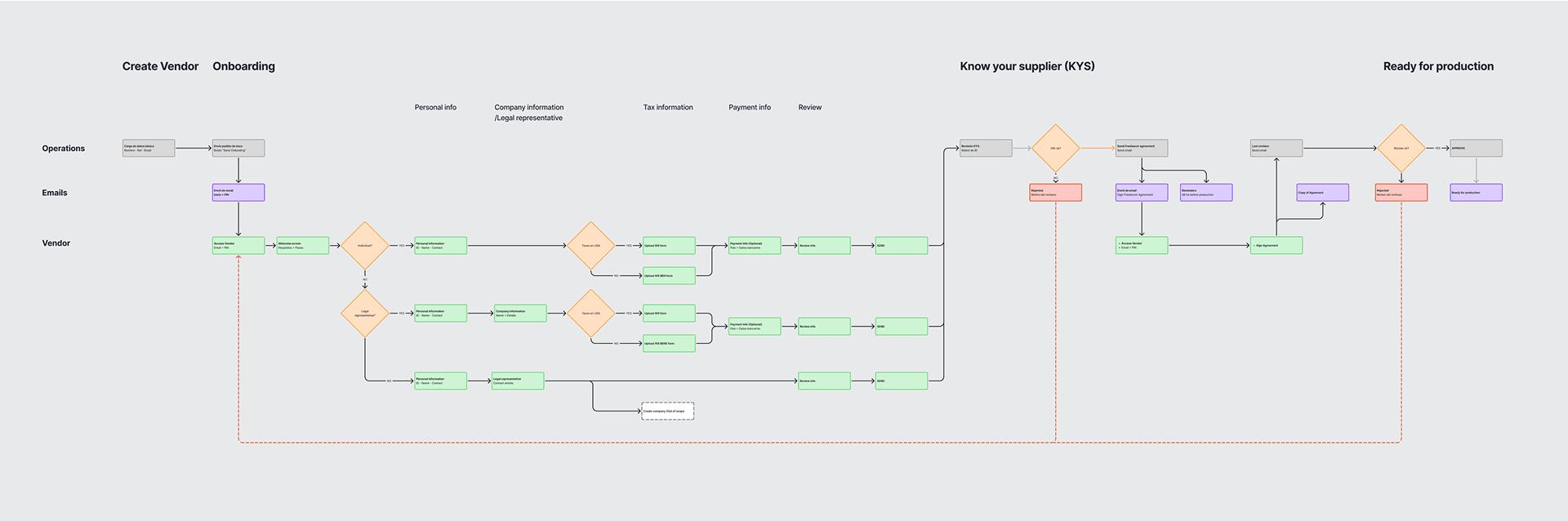
To-Be flow of the complete onboarding process, including validations, operational review, and final approval.
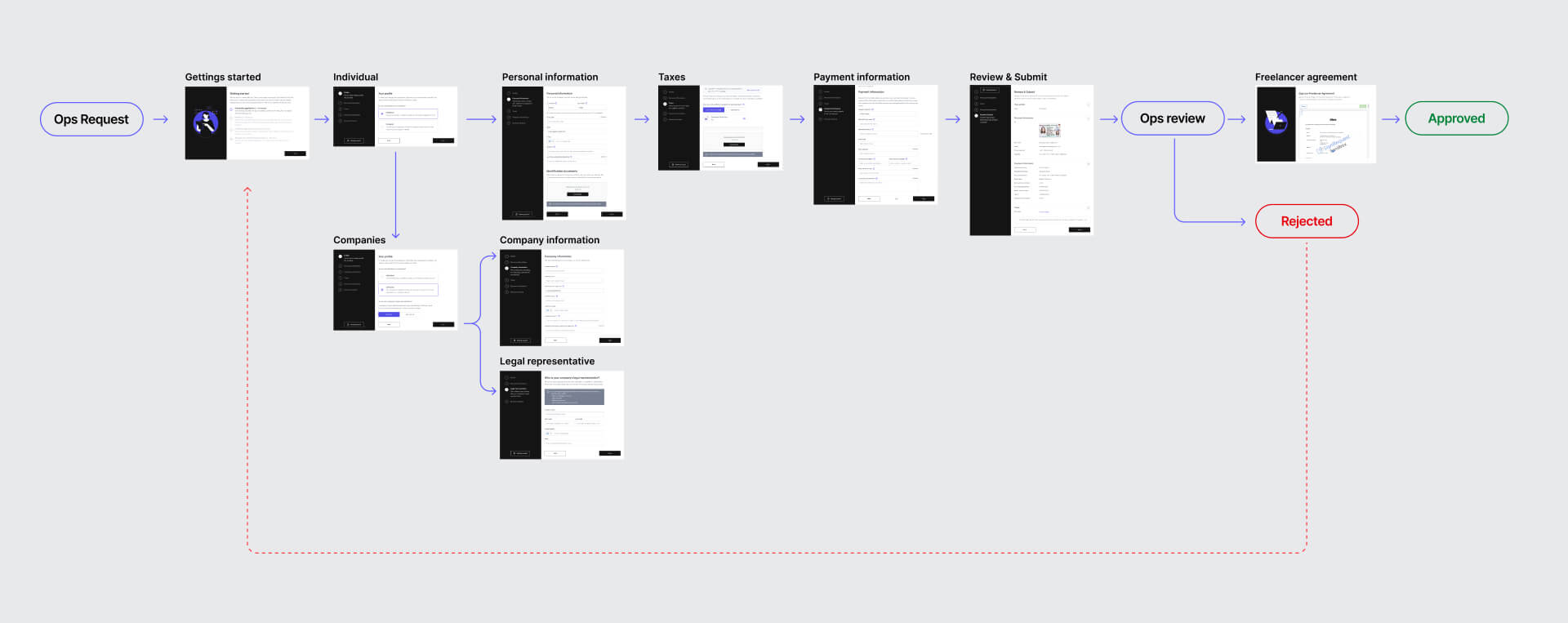
End-to-end onboarding flow, from information and document upload to approval or requests for adjustments, and contract submission.
We ran usability tests with company vendors to validate their understanding of the flow and identify improvement opportunities before handoff.
The validation showed a good general understanding of the process and helped identify friction in specific steps.
Main findings
Based on the validation findings, we adjusted the flow to better anticipate the required information, reduce errors in critical data, and make the relationship between documentation, taxes, contract, and operational review clearer.
We added visibility into the process status and required information at the beginning of the flow.
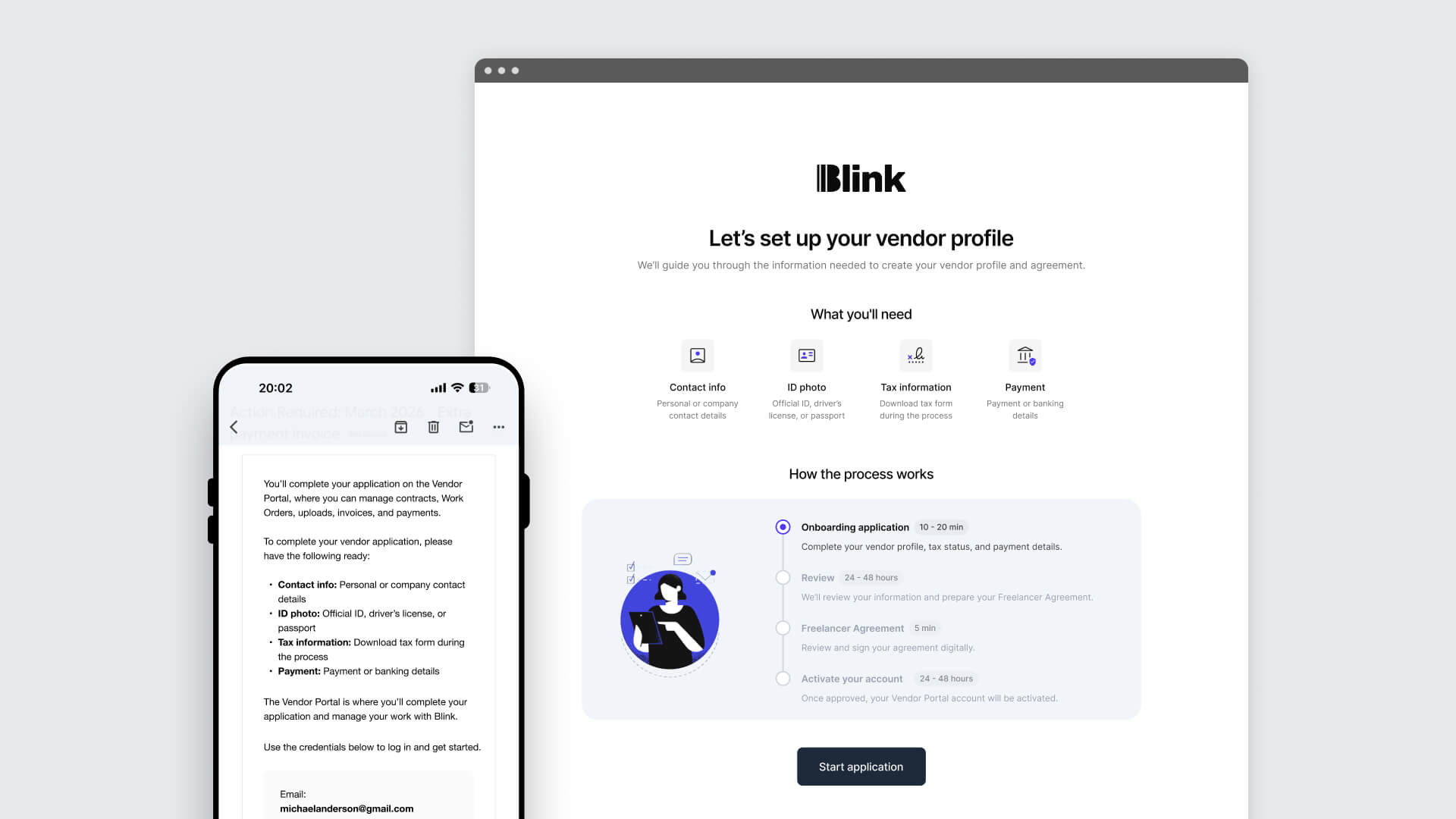
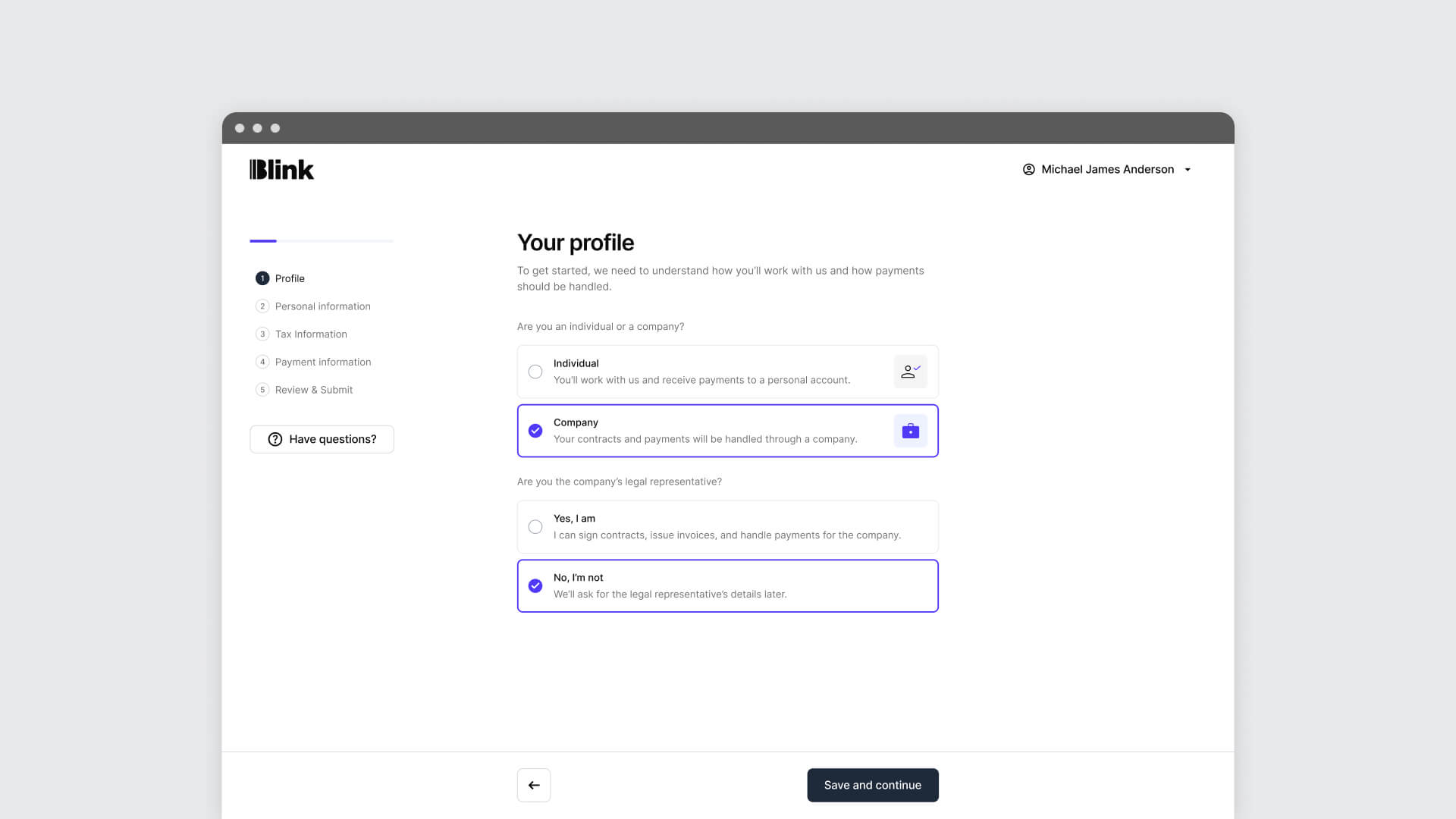
We identified the vendor type at the beginning of the process to show only the relevant steps and fields.
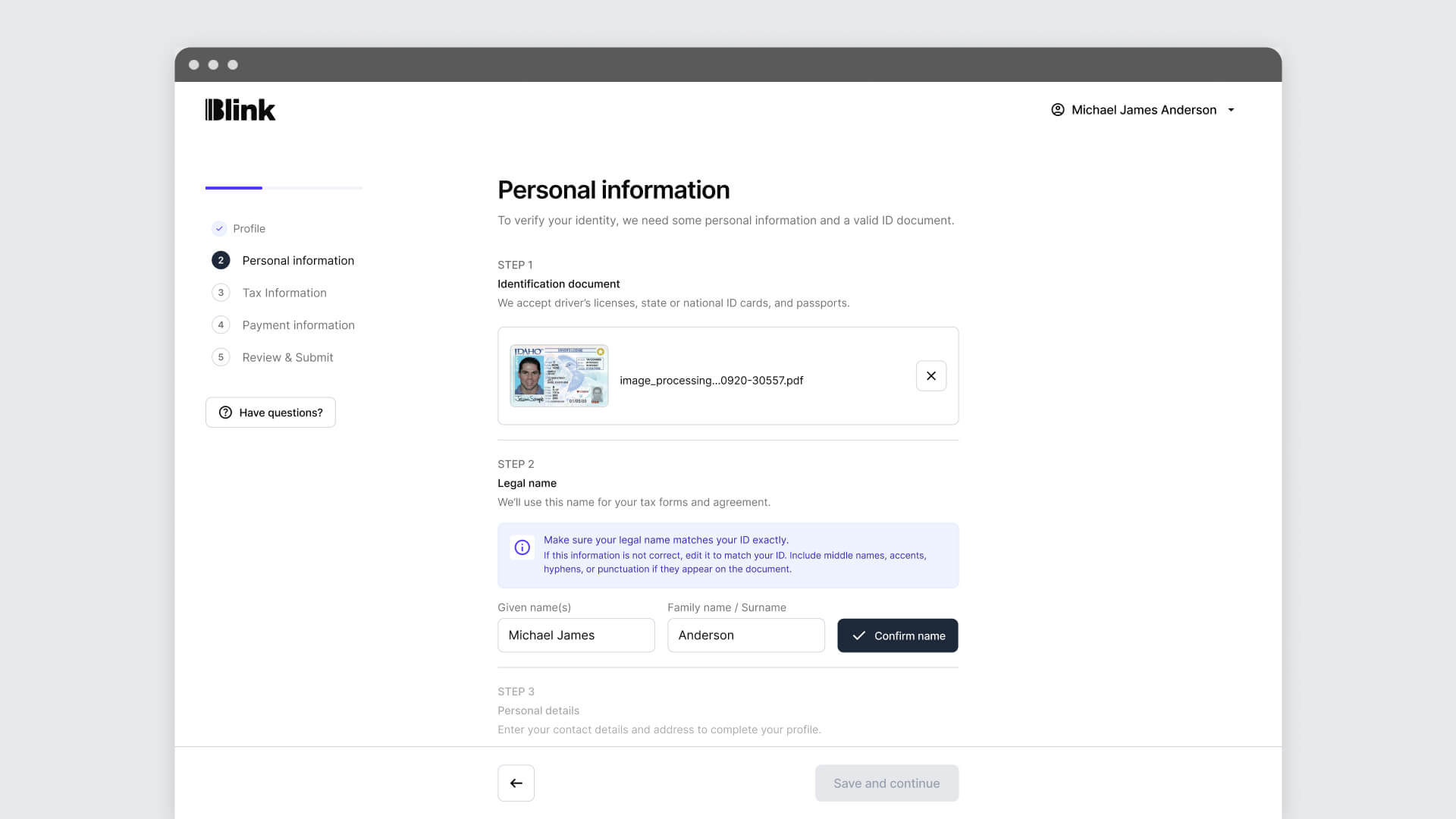
We added a validation step so users could confirm that the entered name matched their documentation exactly.
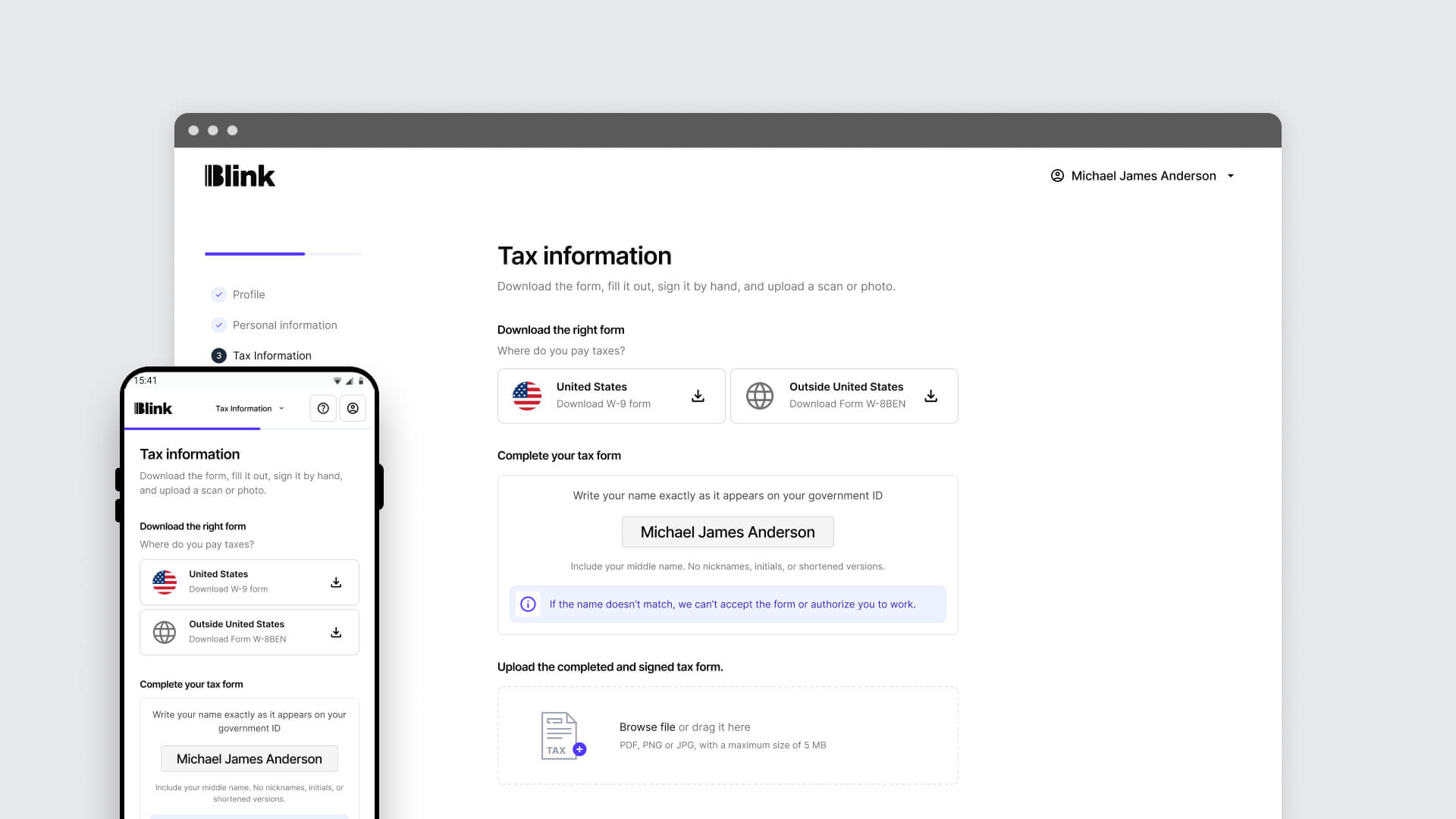
We guided users through selecting and downloading the correct form based on their tax residence, while reinforcing the use of the validated legal name.
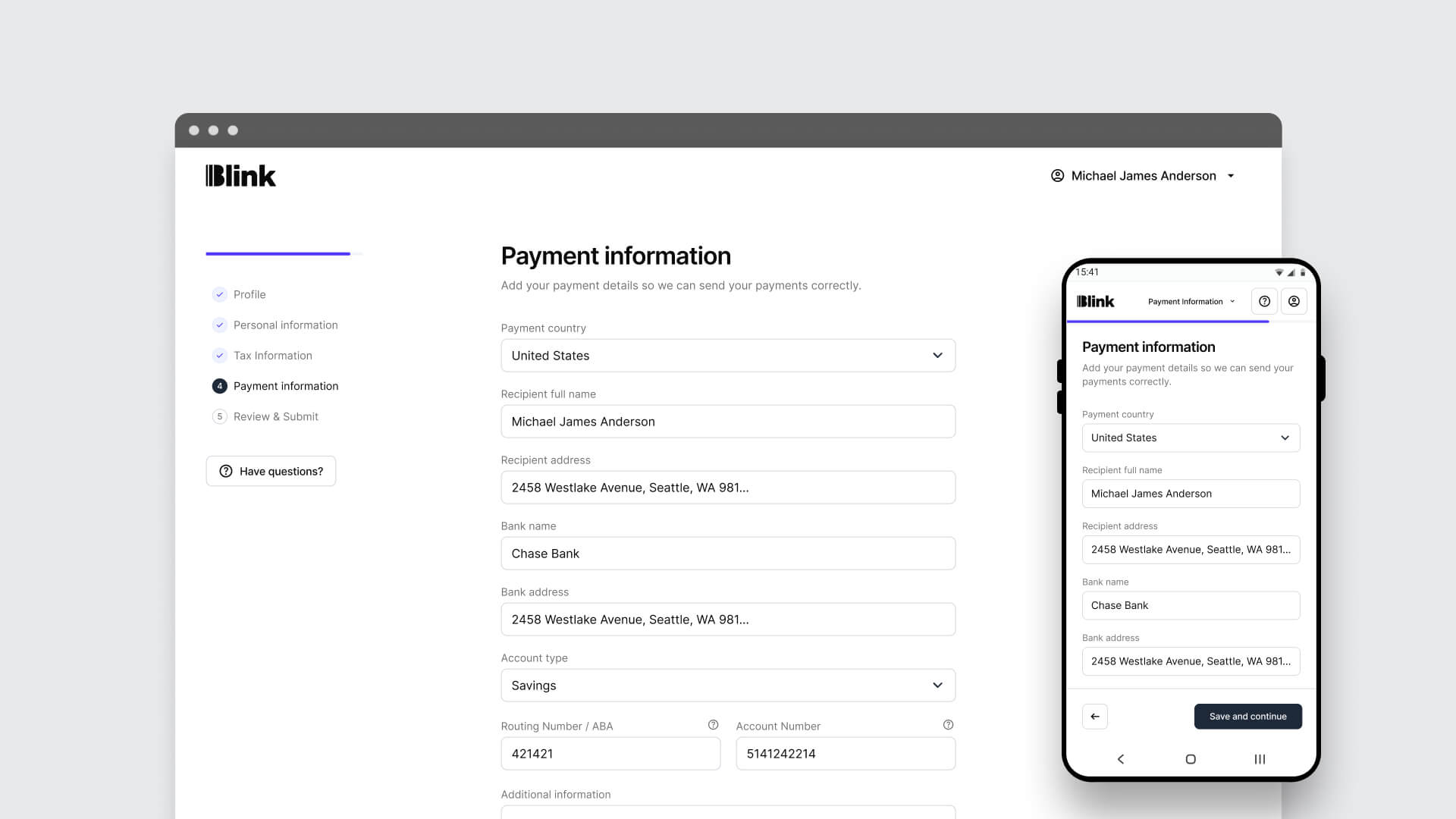
We allowed users to skip payment details temporarily and complete them later.
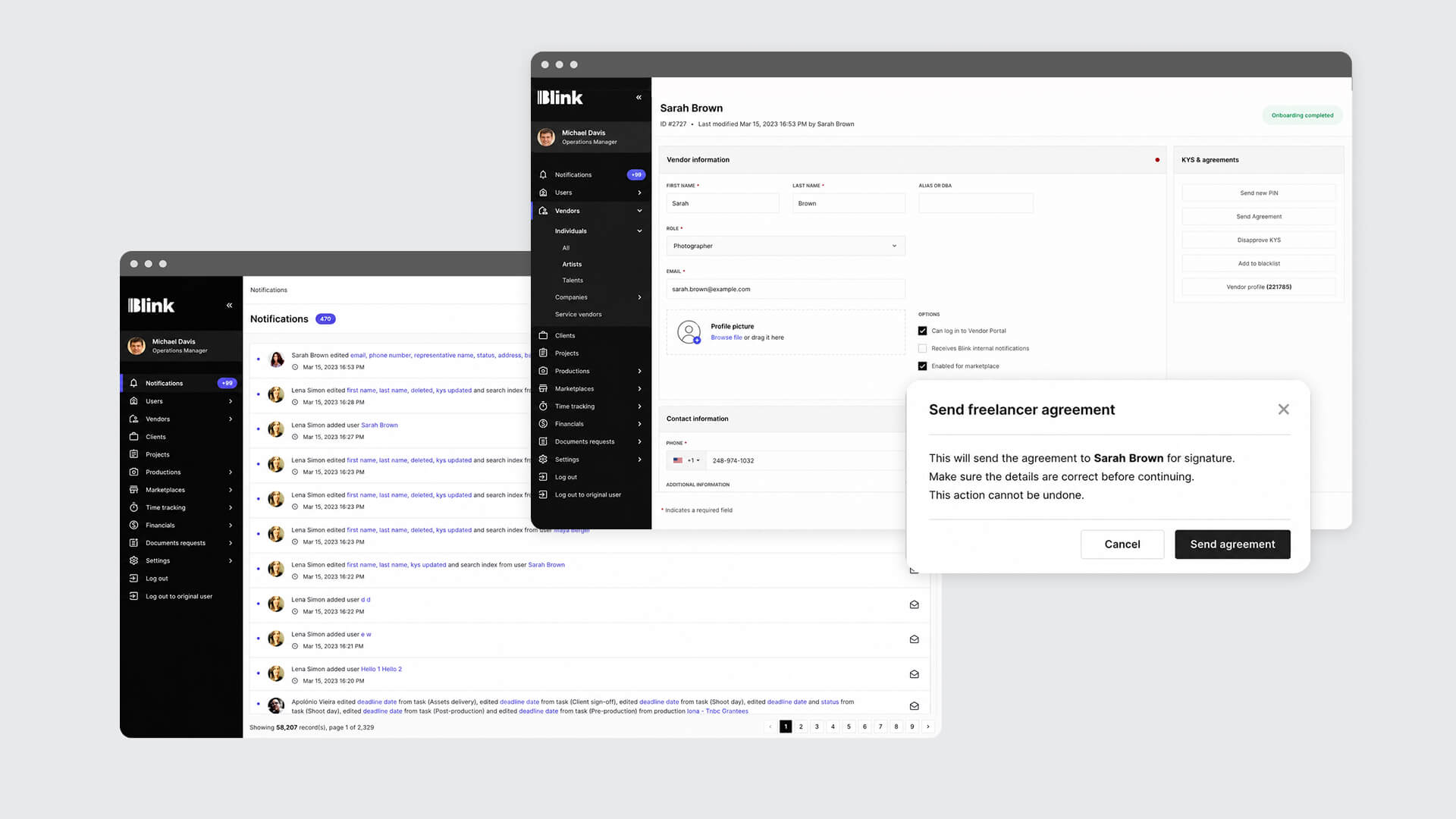
We added actions in Content Studio to validate data, approve the onboarding, and send the freelancer contract.
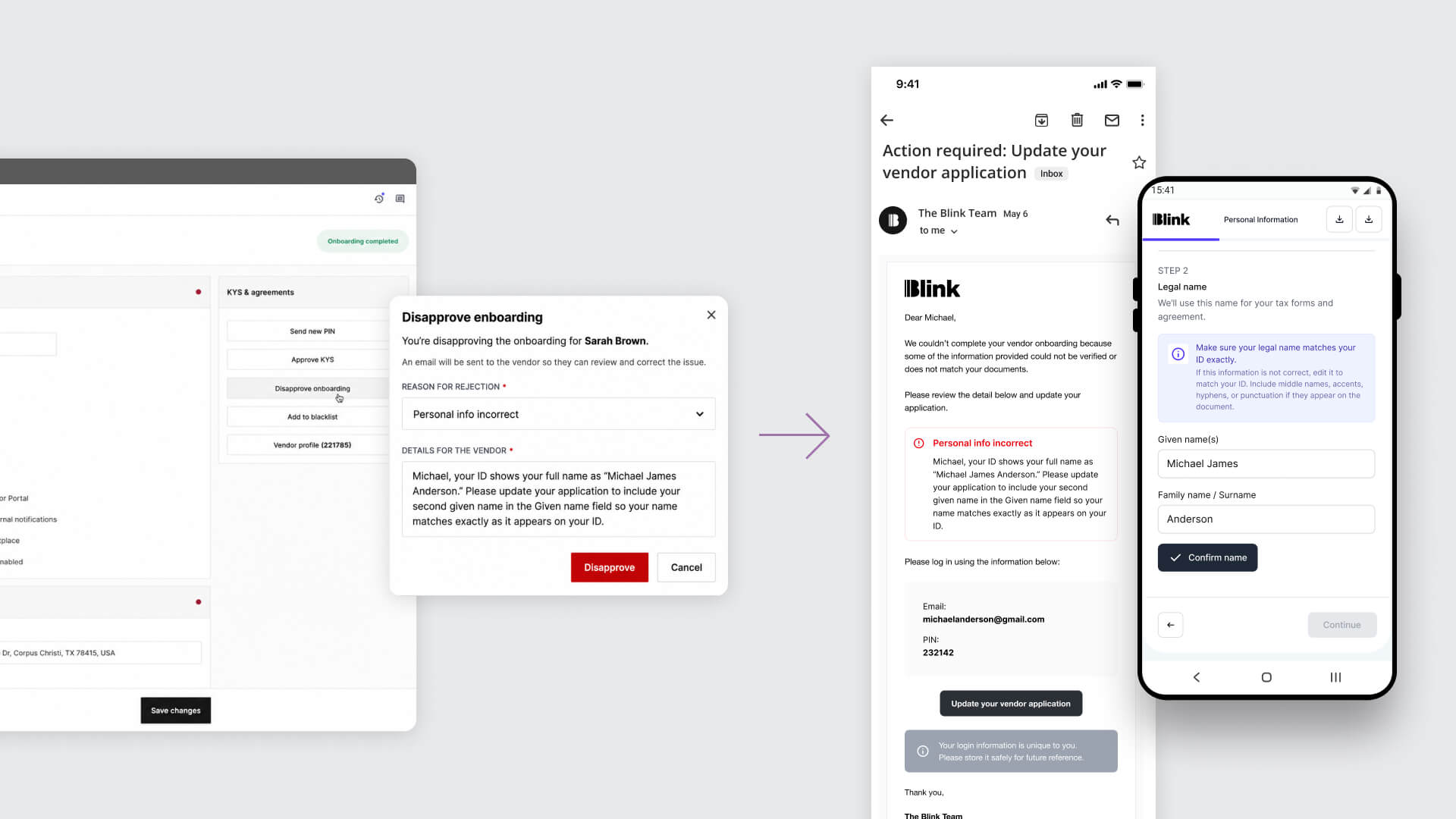
Operations can request corrections from the platform, allowing the vendor to update the information and continue the process.
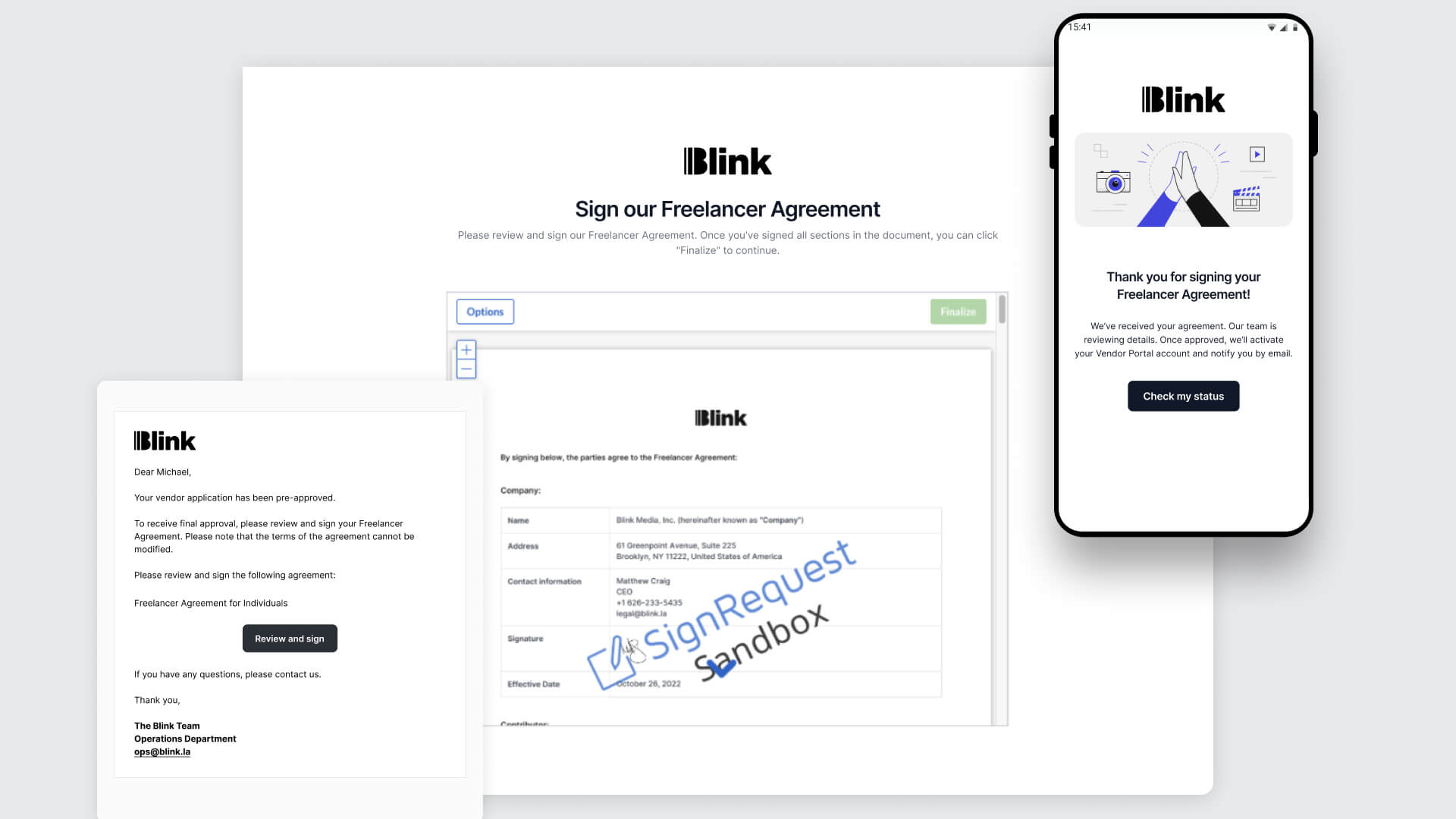
We integrated digital contract signing into the vendor onboarding flow.
👉 The Operations team stopped managing repetitive tasks and was able to focus on critical production situations.