Environmental incident management system
Redesign of a legacy incident-reporting platform into a mobile-first, offline-capable experience for field operations.
Redesign of a legacy incident-reporting platform into a mobile-first, offline-capable experience for field operations.
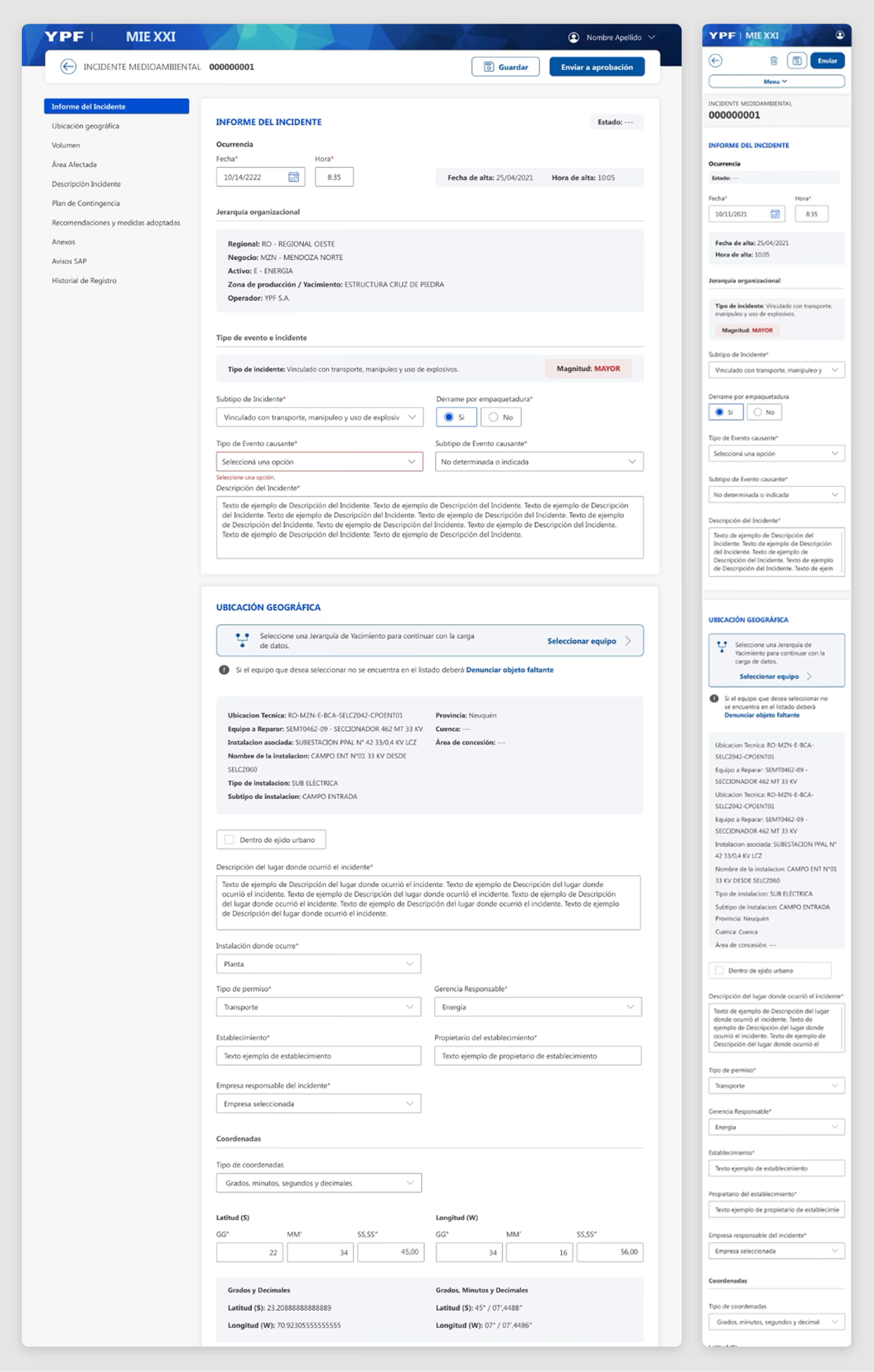
YPF had an environmental incident management platform designed for desktop, built around long forms.
In practice, field operators used it from their phones, reporting incidents directly on-site, often with limited connectivity.
Align the experience with real conditions of use. The existing tool was a long form with no clear structure and no offline support. For someone reporting an environmental incident in the field, under pressure and on a phone, this created concrete problems:
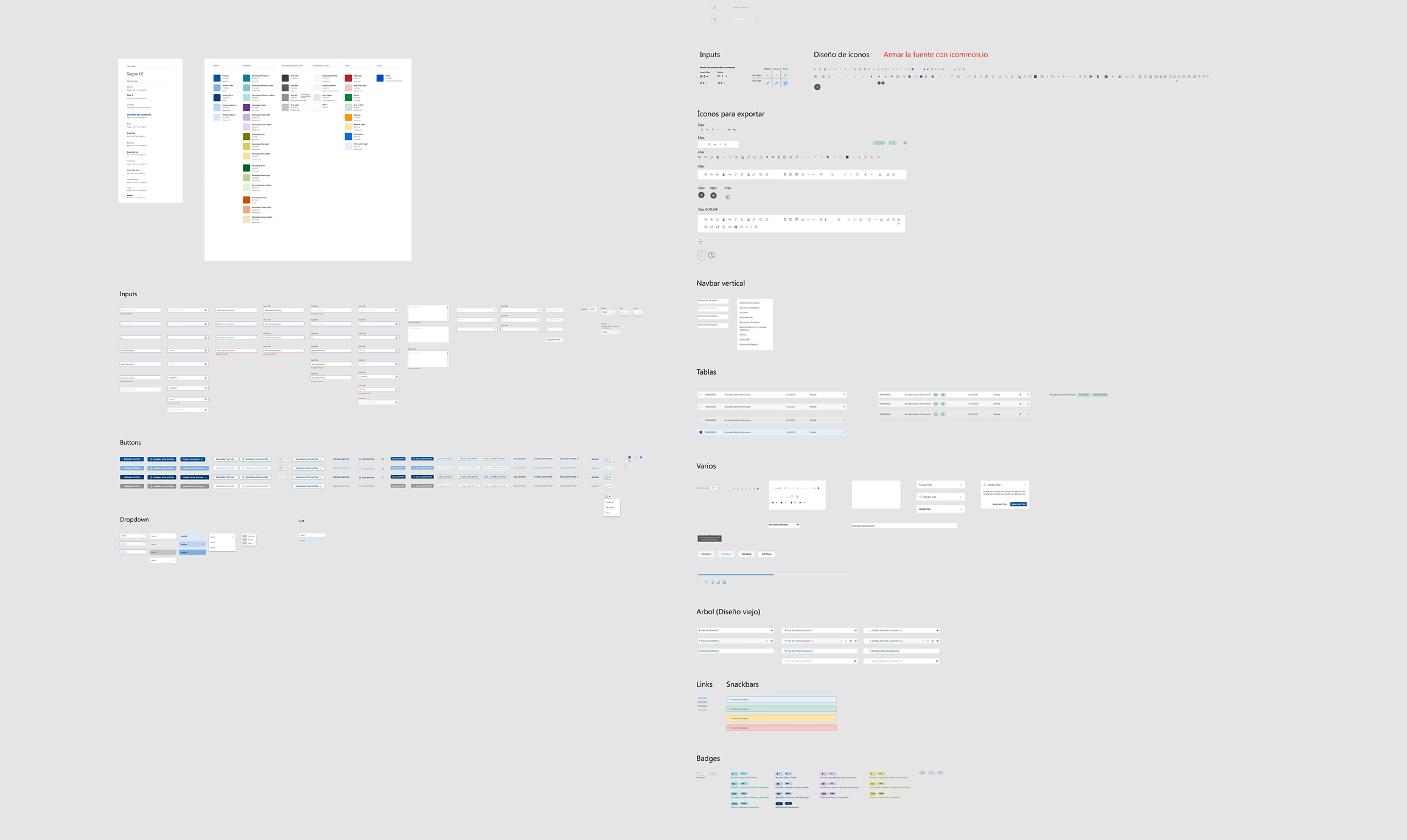
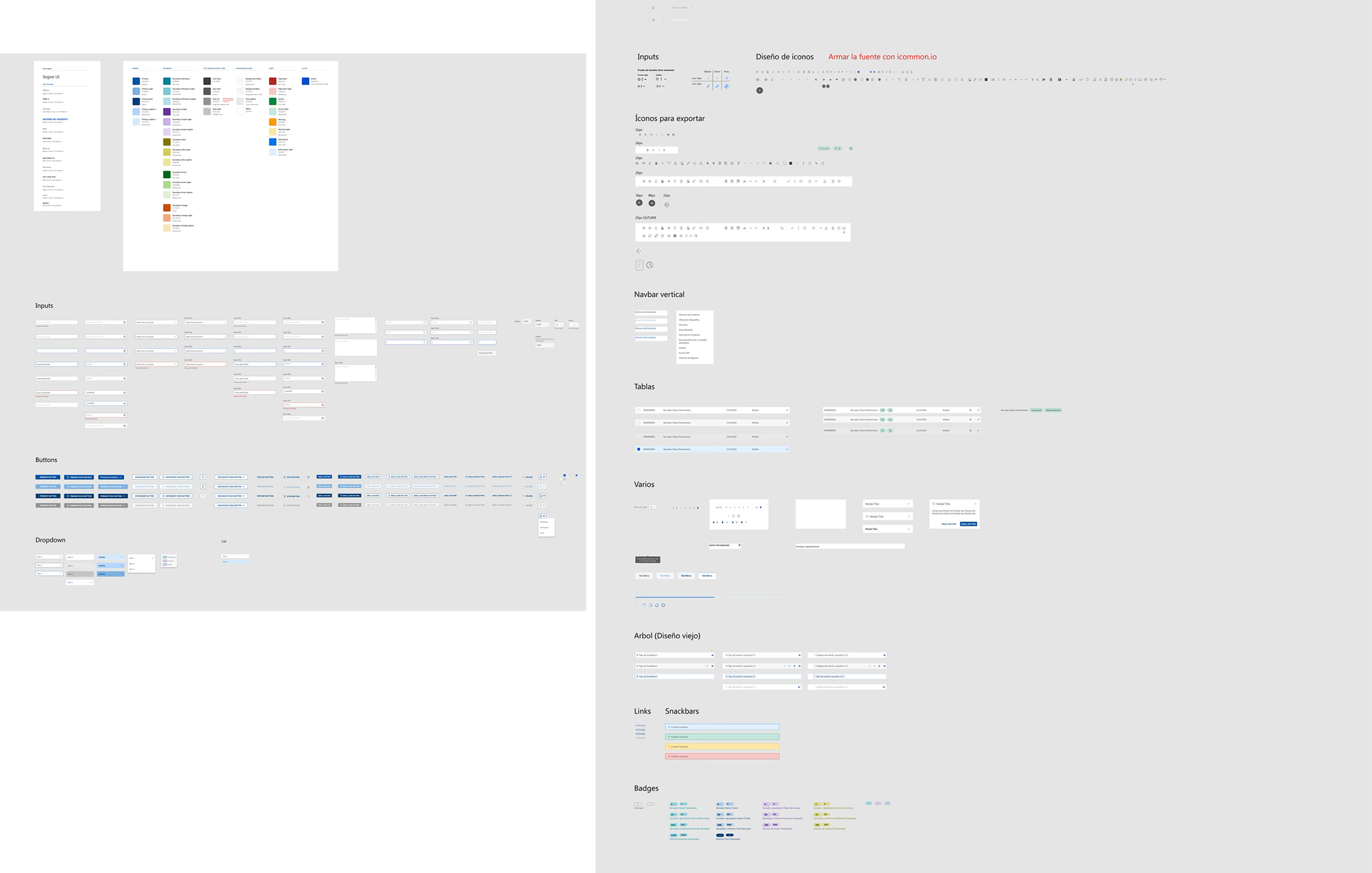
The project covered structure, flows, UI, and copy. I worked closely with the YPF team, under an agile approach that allowed us to iterate and progressively roll out improvements to the system:
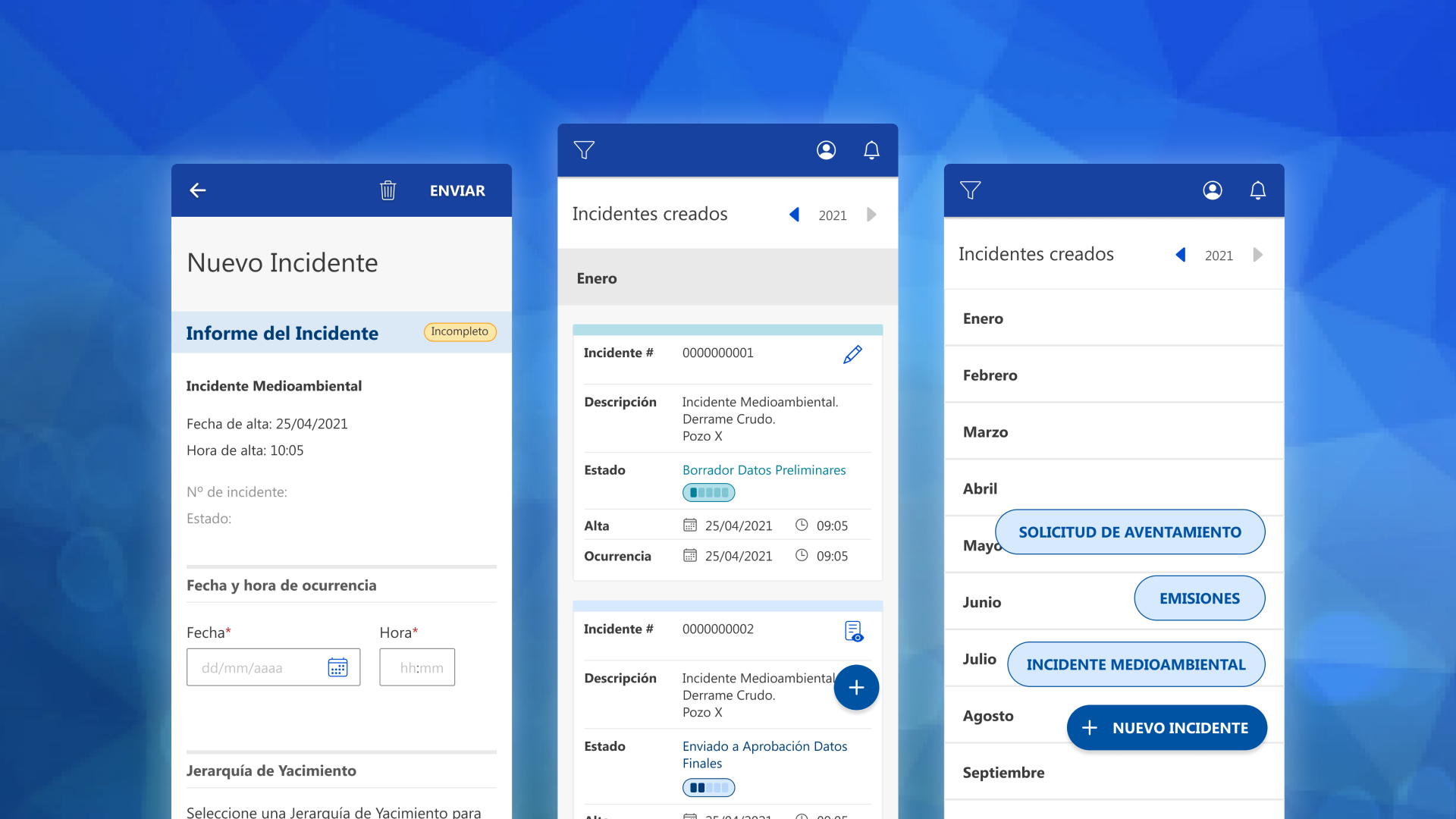
The redesigned platform replaced a single, overwhelming form with a guided, step-by-step flow, built for mobile use in remote environments.
Navigation became clearer, progress was made visible, and the experience aligned with how incident reporting actually happens in the field.